
First Article Approval Steps Worth Writing into the Contract
Contractual first-article approval requires binding solder volume maps, 5-point profile logs, X-ray void limits, and clear downtime liability terms.
Contractual first-article approval requires binding solder volume maps, 5-point profile logs, X-ray void limits, and clear downtime liability terms.

Standard electrical tests verify bare substrate isolation, component pin continuity, thermal stress survival, and electromagnetic conformity before batch signoff.

Electrical test coverage metrics require mapping physical nodal access and test regimes against a complete structural fault universe to limit field escapes.

Buyer-owned test fixtures require explicit PO line items, complete source files, and calibrated limit audits to prevent factory lock-in.

Combining flying probe vectors with boundary scan coverage maximizes test fault detection while protecting micro-land integrity on dense interposers.

Thermal defect attribution in mixed consigned assembly requires combining profile logs, 3D X-ray data, and MSL handling records to split material and process liability.

Test point geometry and access density directly dictate structural fault coverage, fixture expense, signal integrity, and field escape liabilities across production batches.

Sub-atmospheric vacuum reflow during liquidus dwell extracts entrapped flux solvent gases, reducing BGA solder joint void area to under five percent.
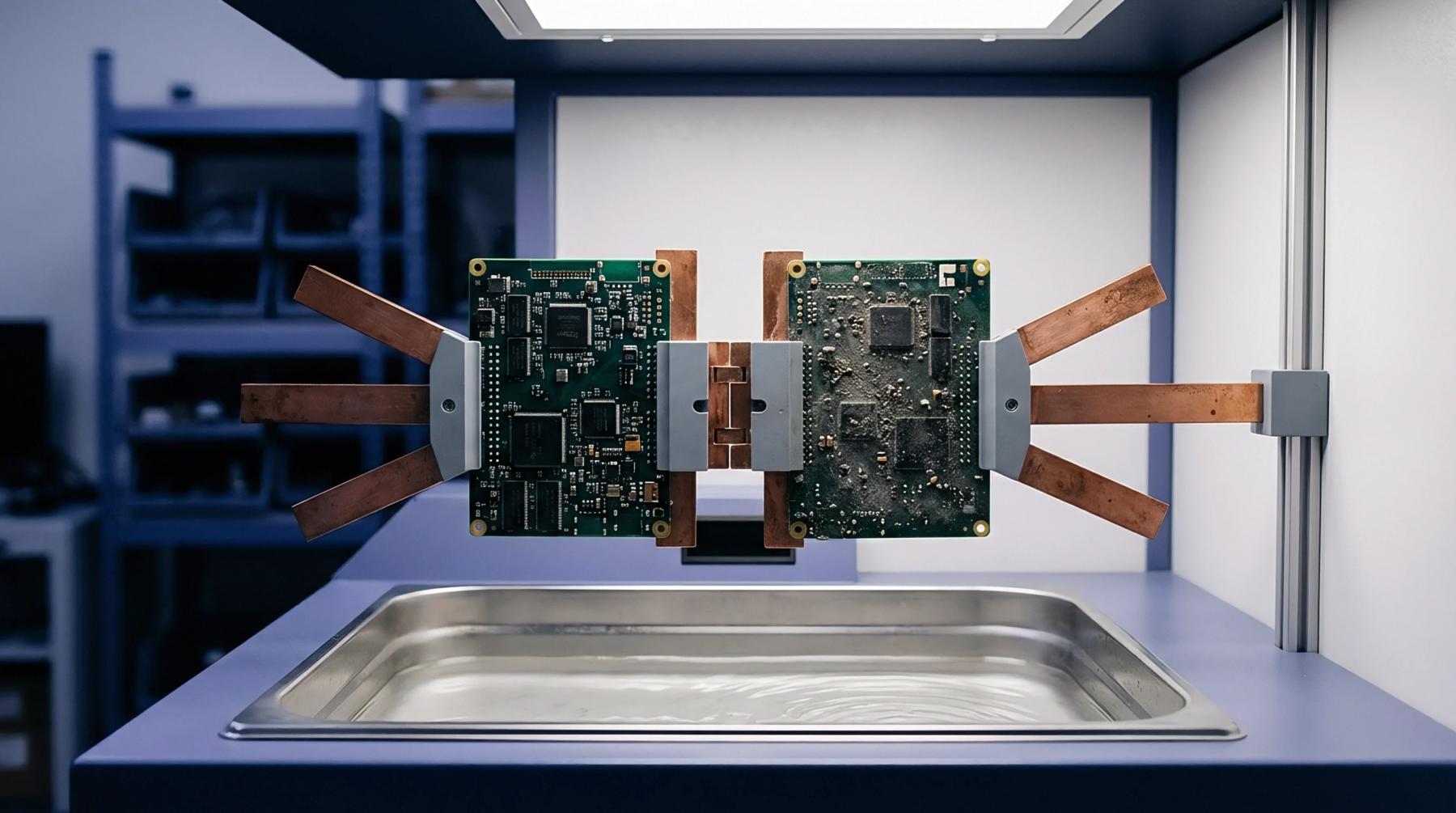
Combining boundary scan and in-circuit testing metrics requires mapping per-pin PCOLA-SOPS access, deduplicating overlapping faults, and logging verified nets for batch release.

Asset recovery requires extracting uncompiled CAD netlists, verifying ICT fault coverage parity, and auditing firmware signing keys before final settlement.

Boundary scan TAP probe evaluation demands dynamic contact resistance monitoring under 20mV dry-circuit limits to prevent false structural defect calls.

IPC Class 3 compliance requires minimum 75 percent vertical barrel fill and under 15 percent internal voiding verified via precision microsectioning.

Automated inspection hold triggers halt surface mount lines on consecutive statistical defects, preventing costly scrap propagation and hidden interconnect failure.
Submicron crack contact under thermal bias masks delamination signals, requiring phase-inversion gating and high-frequency transducers to verify package integrity.

Dynamic multi-stage line balancing synchronizes SMT placement rates, stencil paste volume, and reflow profile margins across mixed component geometries.
Electroformed nickel stencils lower aperture wall roughness below 0.08 µm Ra, enabling clean solder paste release at area ratios down to 0.50 for 0.3mm BGAs.

Dynamic multi-engine optical calibration and thermal drift compensation protocols eliminate false calls and harmonize solder volume thresholds across SMT lines.
Ensuring complete bottom-side nodal access with standard pad pitch and strain-mitigated fixturing locks in fault coverage and prevents field defect escapes.
Verify stencil aperture area ratios exceed 0.66 using SPI volume data before adjusting reflow oven profiles for solder starvation defects.

Contractual test waivers transfer financial risk for latent manufacturing defects from the offshore assembler to the buyer upon shipment authorization.

Arbitrated thermal wear-out liabilities require metallurgical failure proof and Weibull shape parameters exceeding two to establish pre-existing factory escapes.

Consigned component reliability depends on strict intake MBB inspection, calculated J-STD-033 bake cycles, and J-STD-002 solderability testing before reflow.

Physical test probe access drops on high-density microvia boards, demanding solder beads or boundary scan to maintain coverage without damaging copper caps.

Real PCB assembly throughput averages forty to sixty percent of IPC-9850 placement rates due to board transfer, vision checks, and component variation.
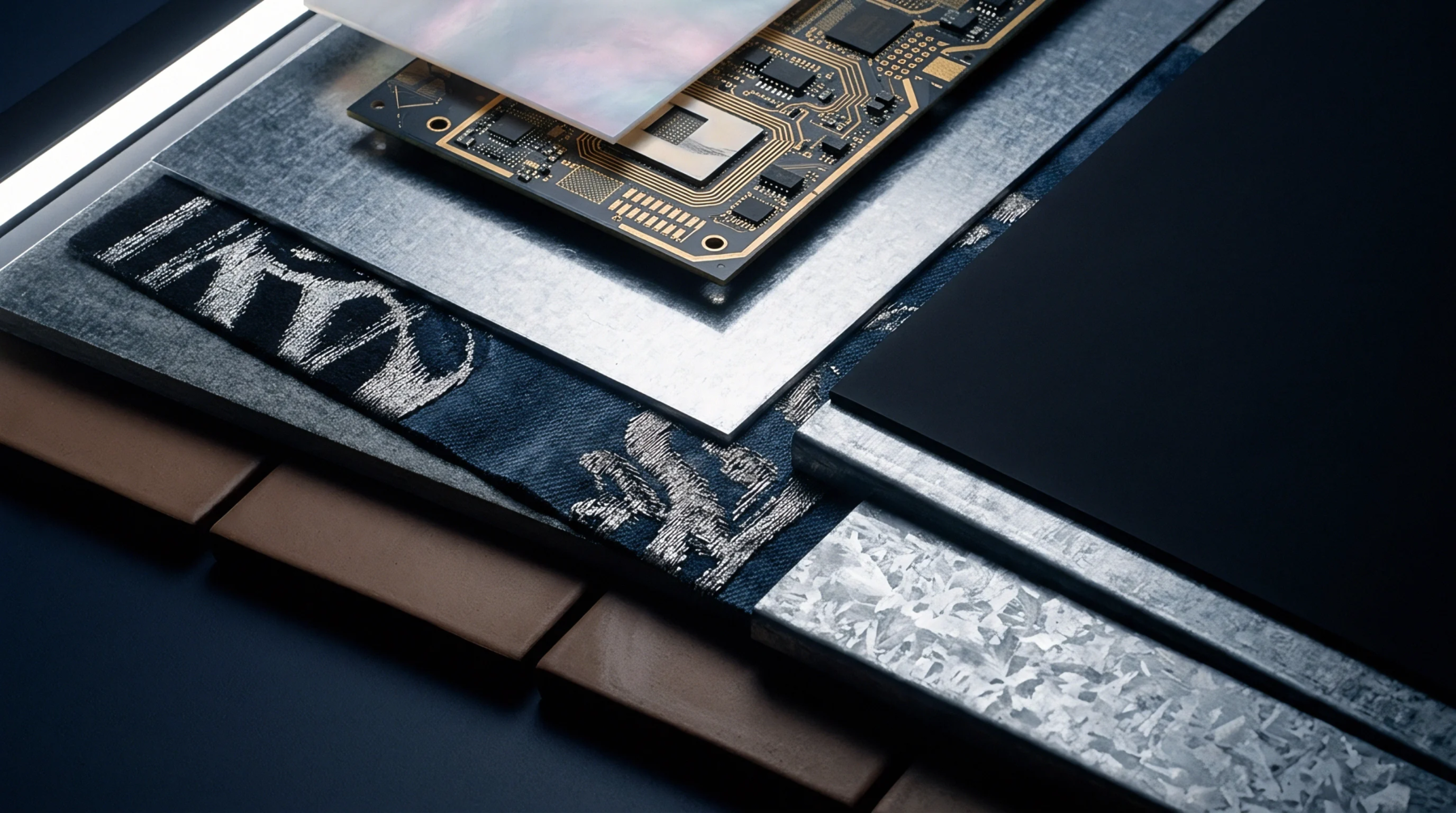
Consigned material sourcing requires strict incoming package checks, chemical decapsulation, and clear contract risk allocation to prevent counterfeit escapes.
Thixotropic rebuild kinetics dictate stencil release and deposit stability, where tuning separation speed to viscosity recovery maximizes fine pitch print yield.

Matching reflow soak durations to flux solvent evaporation rates eliminates sub-component pressure spikes and drops QFN thermal pad voiding below ten percent.

Adaptive surface mesh compensation limits optical false calls on sub-40mm pins by balancing point cloud density against real-time line beat constraints.
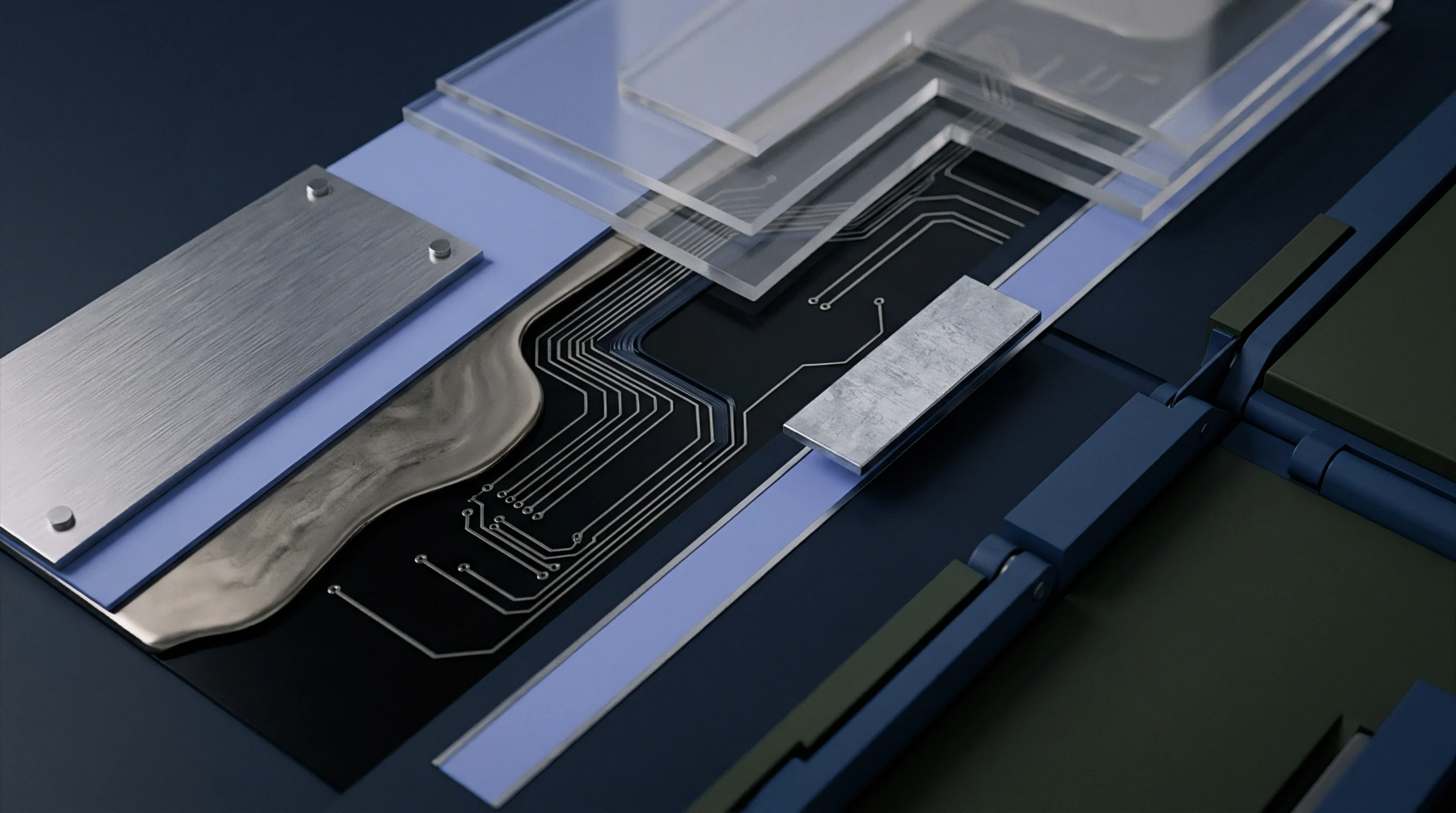
Rapid preheat ramp rates induce severe thermal gradients in MLCCs, causing latent micro-cracks that degrade insulation resistance under bias.
Evaluating stress intensity factors requires calculating mode mixity across bimaterial boundaries to prevent latent interfacial cleavage in high-density packages.
Expertise is a utility, not a secret. sentiention™ publishes its working knowledge as open reference: intelligence layer covering the materials it sources, the markets it enters, and the reference that serves both.