Material Polarizability
Insulation quality dictates the signal integrity of high speed printed circuit board substrates by quantifying how much energy a medium stores in an electric field. The dielectric constant represents this ratio of the permittivity of a substance to the permittivity of a vacuum. Laminate manufacturers specify this value for base materials because it determines the propagation velocity of electromagnetic waves along traces.
Higher values lead to slower signal speeds and increased impedance variations. Designers select resins with low and stable ratings to minimize signal attenuation in high frequency applications.
Frequency Variance
Signal speed shifts when the underlying substrate experiences changes in electromagnetic field oscillations. Laminate manufacturers characterize the performance of these materials across a spectrum to account for the tendency of polar molecules to align more sluggishly as cycles increase. Material datasheets report different values at one megahertz compared to ten gigahertz to provide engineers with accurate data for impedance control calculations.
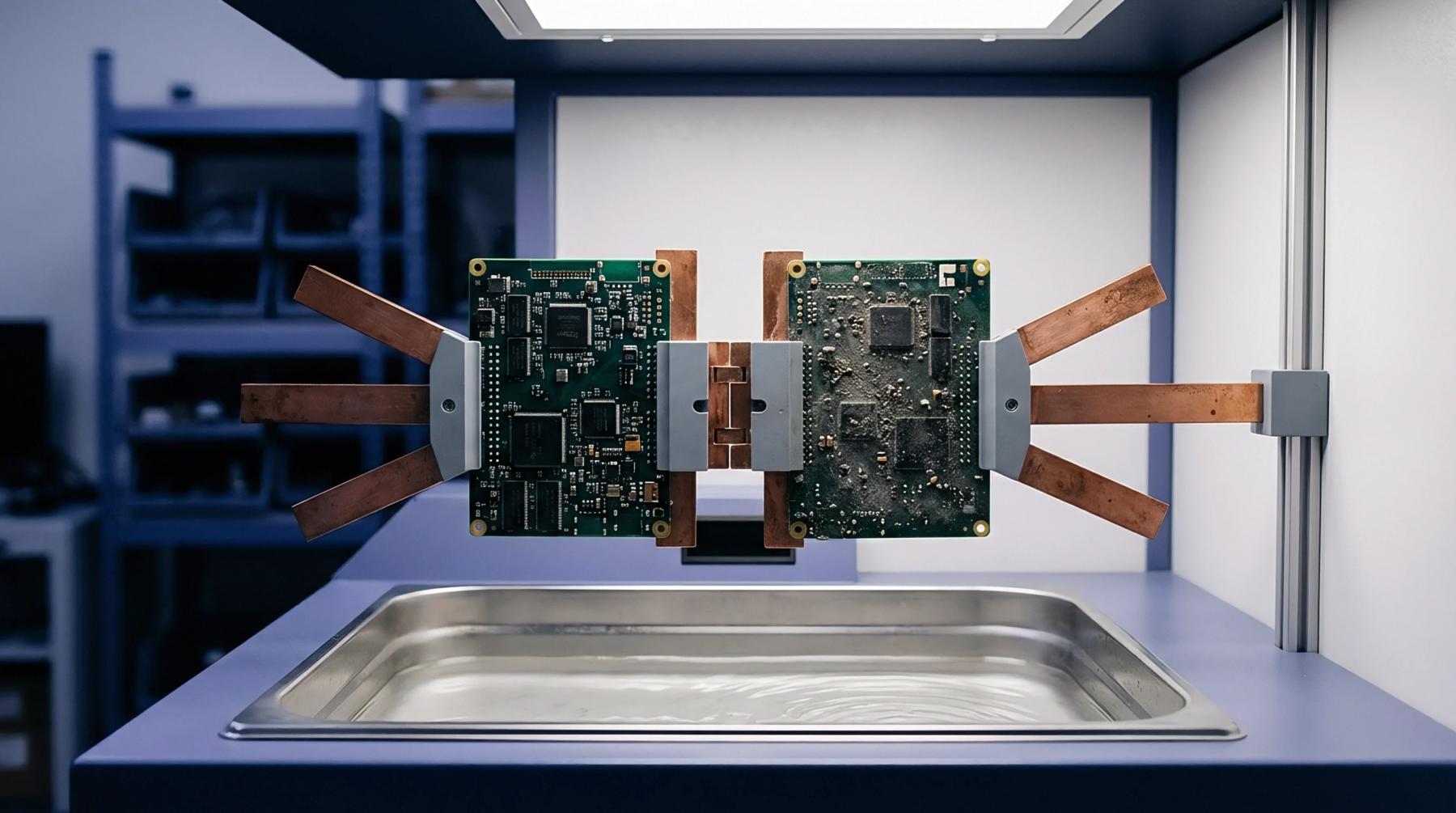
Variations in the resin content or the glass cloth pattern within a prepreg layer alter the local effective value across the board area. Deviations from the target value induce reflections that degrade the eye pattern of a digital signal. Testing involves placing a coupon into a specialized fixture to measure the capacitance shift of a known geometry.
Laboratories report these measurements at standardized humidity and temperature conditions to ensure repeatability between different production lots.
Fabrication Impact
Etching processes and resin distribution change the effective geometry of conductors and the surrounding insulation. Variations in trace width or copper thickness alter the field lines concentrated within the laminate rather than the air. Excess resin richness near the copper surface lowers the operational value whereas regions with high glass fiber density raise it.
Assemblies using thicker cores or additional prepreg sheets experience shifts in total capacitance based on the bulk properties of the stackup. Controlled impedance manufacturing relies on maintaining a consistent laminate thickness and homogeneous material composition to keep the local permittivity within the design tolerance. Homogeneous materials minimize local impedance discontinuities across the surface of the board.