
Lead Free Solder Alloy Attenuation Factors during X-Ray Profiling
Lead-free alloy attenuation shifts require recalibrating X-ray tube parameters and grey-scale thresholds to ensure accurate void measurement and line yield.
Lead-free alloy attenuation shifts require recalibrating X-ray tube parameters and grey-scale thresholds to ensure accurate void measurement and line yield.
Component placement and soldering quality depend on stencil aperture ratios above 0.66, vision placement accuracy under 25 microns, and controlled liquidus reflow profiles.

Factory first pass yield figures routinely mask high field defect rates by excluding off line retests, unmapped fault coverage gaps, and clamping stress false passes.

Optimal SMT yield requires matching paste shear-thinning rheology with stencil area ratios above 0.66 and reflow profiles holding peak temperatures within 5°C.
True yield verification requires subtracting all post-rework passes from raw factory counts to base contract billing exclusively on unassisted board passes.

Boundary scan netlist coverage is bounded by physical TAP access, requiring explicit fault universe math to quantify unverified structural escape risks.

Buyer-owned test fixtures require explicit PO line items, complete source files, and calibrated limit audits to prevent factory lock-in.

First pass yield gaps in high-density assemblies stem from optical test blind spots, microvia structural fatigue, and restricted physical probe access.
Modeling probe parasitics and edge skew on boundary scan nets prevents false test failures and maintains scan chain timing margins under fixture actuation.

Optimizing surface mount stencil apertures demands balancing area ratios above 0.66, foil wall smoothness, and pad reductions for repeatable paste volume.
Allocating latent defect risk in advanced assembly relies on defined screening limits, clear warranty triggers, and empirical root-cause testing formulas.
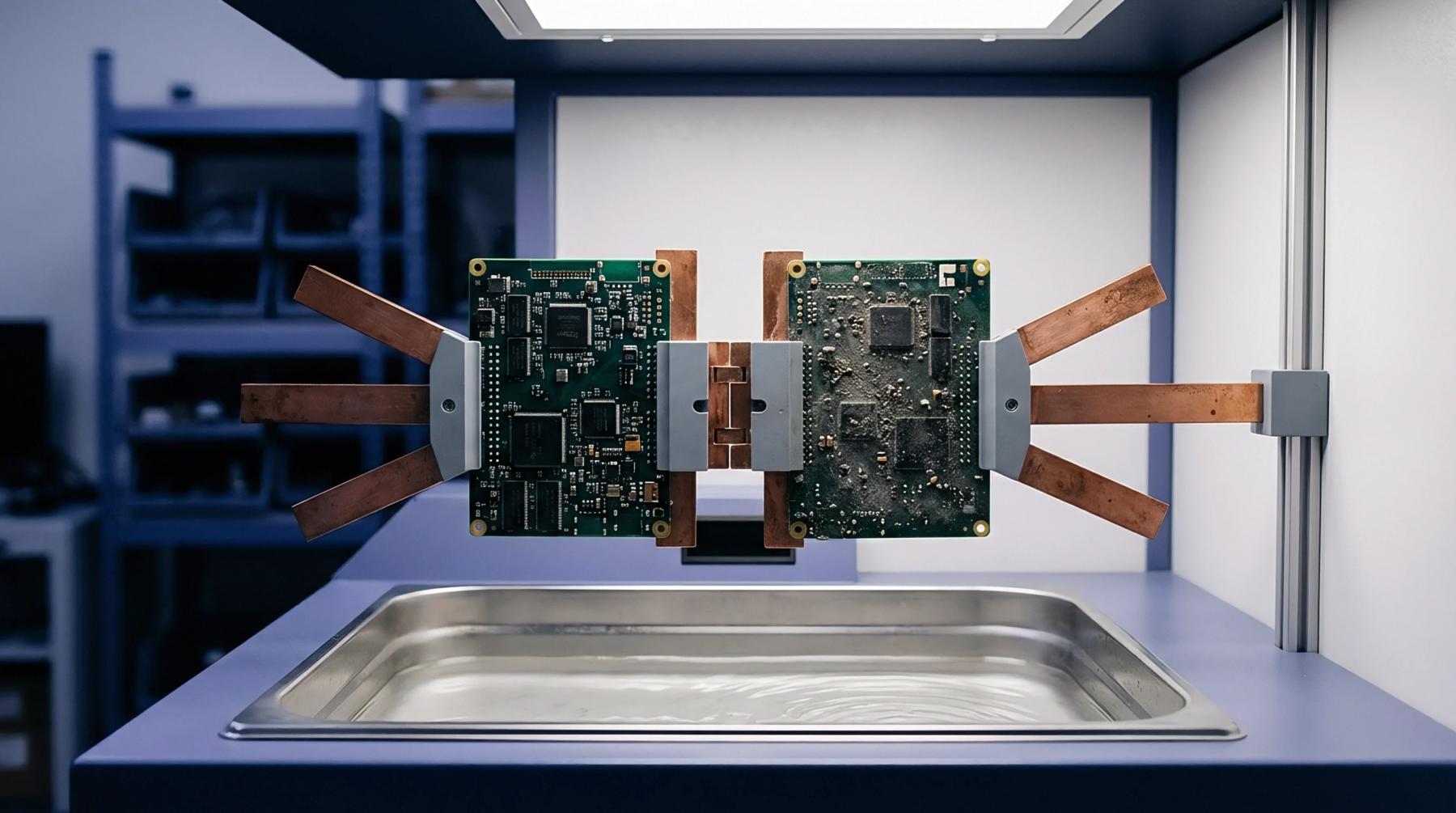
Combining boundary scan and in-circuit testing metrics requires mapping per-pin PCOLA-SOPS access, deduplicating overlapping faults, and logging verified nets for batch release.

Asset recovery requires extracting uncompiled CAD netlists, verifying ICT fault coverage parity, and auditing firmware signing keys before final settlement.

Thermogravimetric solvent mass loss below half a percent prior to liquidus eliminates outgassing macro-voids under bottom-terminated components.

Fine pitch machine vision calibration requires quartz grid targets, telecentric optics, and closed-loop thermal drift compensation to hold 5 µm accuracy.
Surveillance compliance demands continuous cross-tier test record alignment, analytical material validation, and strict engineering change authorization.

Financial exposure bounds in high-density SMT rely on binding paste volume thresholds, AOI escape modeling, and explicit contract scrap liability caps.

Vapor phase reflow eliminates thermal deltas across unequal copper density substrates by transferring latent condensation energy at constant fluid temperatures.

Contractual SMT yield indemnification defines financial remedies for scrap exceeding baseline thresholds by isolating line defects from component defects.
Electroformed nickel stencils lower aperture wall roughness below 0.08 µm Ra, enabling clean solder paste release at area ratios down to 0.50 for 0.3mm BGAs.
Allocate micro BGA line standby and rework exposure by binding hourly downtime tariffs and hot-gas rework liability directly to SPI, AXI, and feeder logs.

Converting return rates to a warranty reserve requires multiplying test escape fractions by total landed failure costs and scaling across Weibull life curves.
Verify stencil aperture area ratios exceed 0.66 using SPI volume data before adjusting reflow oven profiles for solder starvation defects.

Radiometric gain correction standardizes pixel sensitivity to eliminate streak artifacts and secure accurate void and volume sizing in multi-slice board scans.
Contractual yield adjustments protect buyers from paying assembly fees on reworked boards while allocating bonepile diagnostic labor transparently.
Optimized lead-free reflow profiling requires thermal deltas under eight degrees, controlled time above liquidus, and precise paste transfer efficiency.

Real PCB assembly throughput averages forty to sixty percent of IPC-9850 placement rates due to board transfer, vision checks, and component variation.

Fine pitch stencil printing stability drops sharply below 0.50 area ratio, requiring Type 5 powder, nano-coated apertures, and tight SPI volume limits.

Sub-atmospheric pressure profiling reduces bottom-terminated component voiding below 5% by expanding and evacuating trapped flux gases during liquidus.
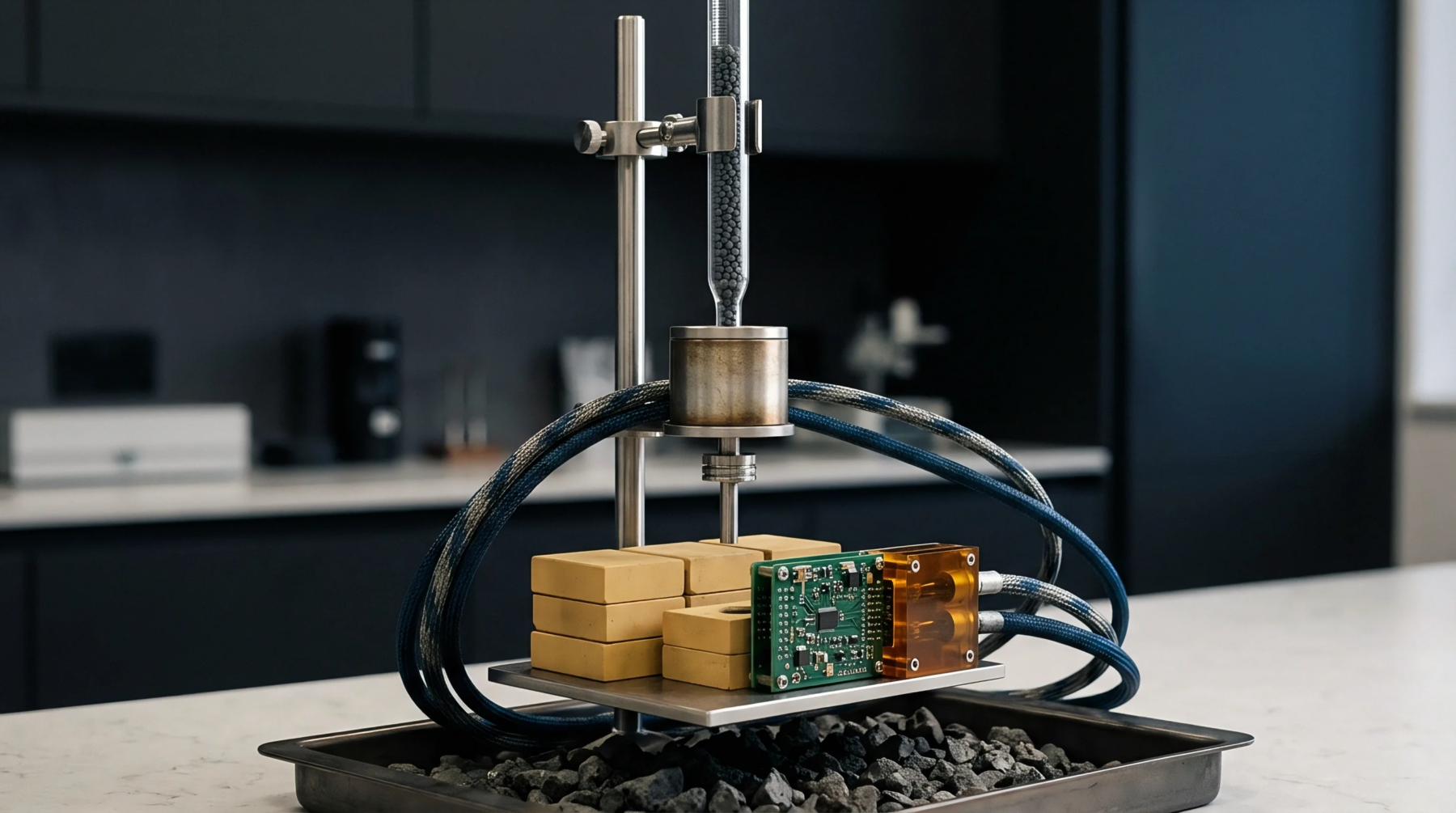
Optimize squeegee speed, separation rate, and aperture nanocoating to stabilize paste viscosity, maintain high transfer efficiency, and maximize SPI yields.
Expertise is a utility, not a secret. sentiention™ publishes its working knowledge as open reference: intelligence layer covering the materials it sources, the markets it enters, and the reference that serves both.