
Managing Thermal Variance in High Layer Count Printed Circuit Boards
Extended soaking zones, convective transfer, and dedicated pallet tooling compress board temperature spreads within twenty-two degrees Celsius.

Extended soaking zones, convective transfer, and dedicated pallet tooling compress board temperature spreads within twenty-two degrees Celsius.

Silica loading raises minimum melt viscosity and induces shear-thinning, requiring higher press pressures and controlled heating rates to prevent trace microvoids.

Dynamic prepreg minimum viscosity dictates exact hydraulic ram pressure switch timing to ensure void-free inner copper fill without inducing trace swim.

Microsection evaluation must confirm probe witness penetration stays confined to the gold and palladium cap without initiating microcracks in the nickel deposit.
Real-time shadow moiré reflow integration monitors dynamic component warpage to modulate upper and lower furnace convection, preventing solder open defects.

Dynamic package collapse during reflow compresses joint clearance, elevating internal bubble retention pressure and trapping voids under thermal pads.

Controlled tip geometry and lateral scrub stabilize ENIG contact resistance while preventing false opens and deep dielectric damage on bare boards.
Model anisotropic permittivity tensor drift across every lamination cycle to prevent multi-degree phase velocity errors and panel scrap above 30 GHz.
Calculate glass weave skew by integrating spatial permittivity deltas across weave pitch to establish phase delay bounds for high-speed differential pairs.

IPC-9252 test land placement demands exact probe diameters, stagger offsets, and mask clearances to secure full netlist coverage without board damage.

Dynamic thermal warpage pulls fine pitch arrays out of planarity during reflow; managing it requires stepped stencils, rigid pallets, and hot coplanarity data.
Specify mechanically spread low-Dk glass fabrics and restrict prepreg substitution in fabrication drawings to control high-frequency phase skew and panel cost.
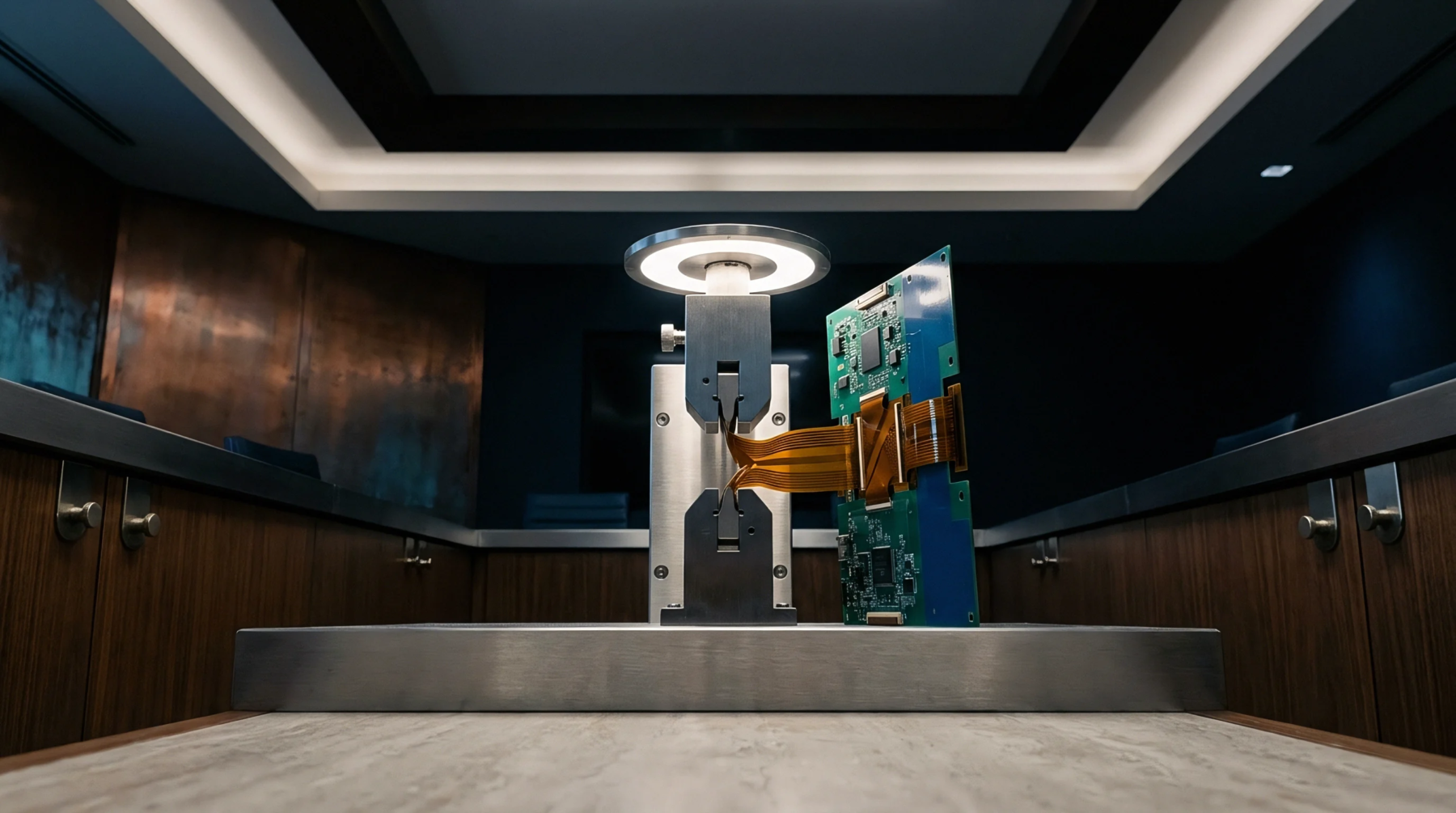
Iterative voxel deconvolution removes missing-cone elongation in limited-angle X-ray scans, enabling accurate fine-pitch joint void and bridge qualification.

Statistically valid measurement uncertainty budgets defeat arbitrary border seizures by demonstrating that regulatory test results span legal compliance limits.
Align factory pre-shipment sampling with destructive customs laboratory thresholds to prevent border detentions, demurrage costs, and lot seizures.
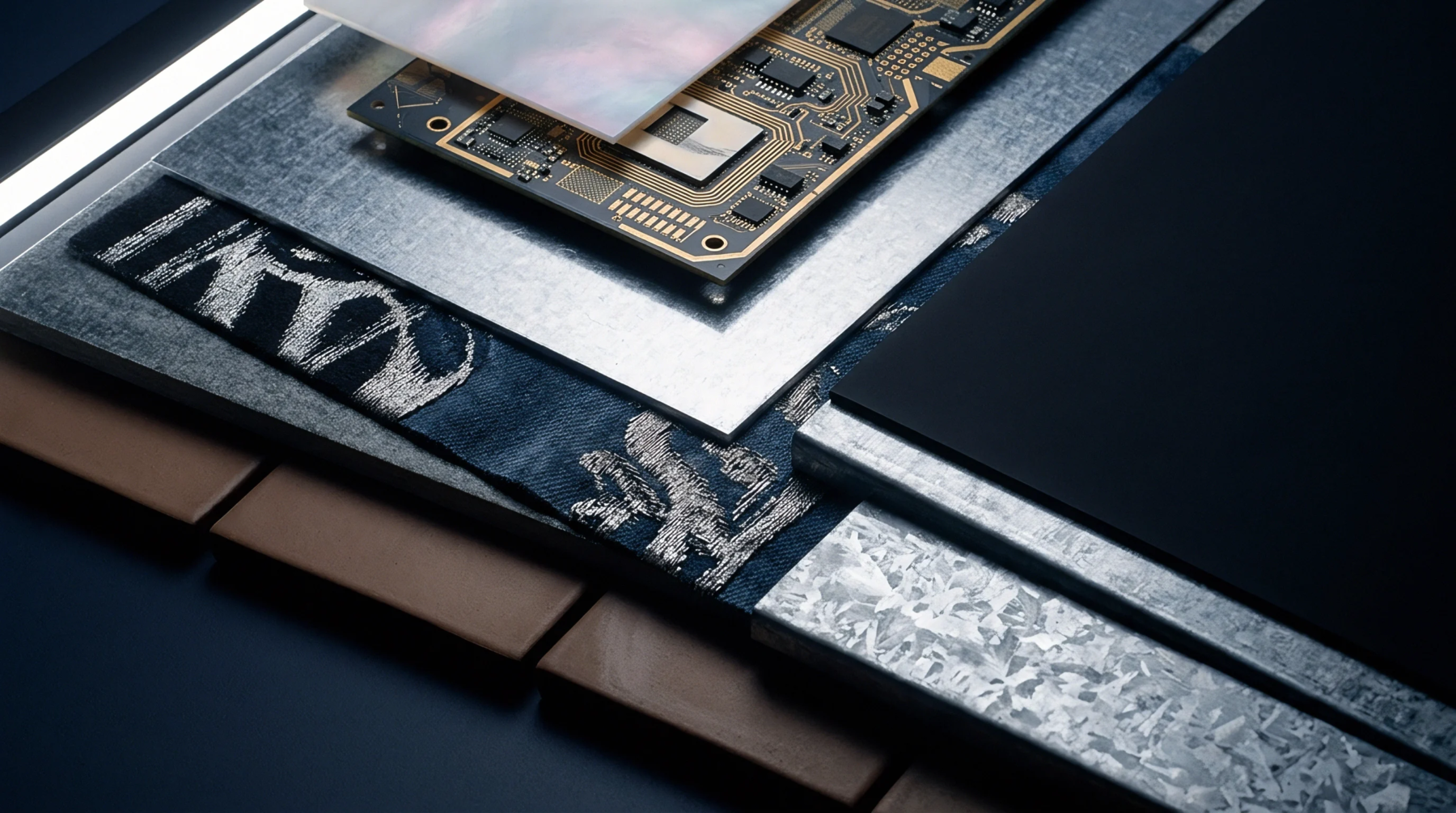
Calibrated multi-angle filtration and empirical scatter correction prevent false solder voiding calls and false barrel-fill rejections on dense PCB assemblies.

Maintain complete technical construction files and sealed production golden samples to legally challenge and overturn border detentions within statutory deadlines.

Vacuum lamination compacts copper tooth profiles and redistributes resin fractions, escalating high-frequency insertion loss far beyond datasheet values.
Dynamic in-situ monitoring during rapid thermal ramps separates unbuffered logic threshold dropouts from solder fatigue before boards escape to the field.

Dynamic gain normalization eliminates laminography ring artifacts and false solder void calls caused by flat panel detector drift and gantry motion tilts.

Aligning mid loss resin with very low profile foil minimizes high-frequency conductor loss while preventing peel strength failure during assembly.

Sub-0.5 area ratios starve solder volume, accelerating brittle intermetallic boundary defects that require stepped stencils and Type 5 paste to resolve.
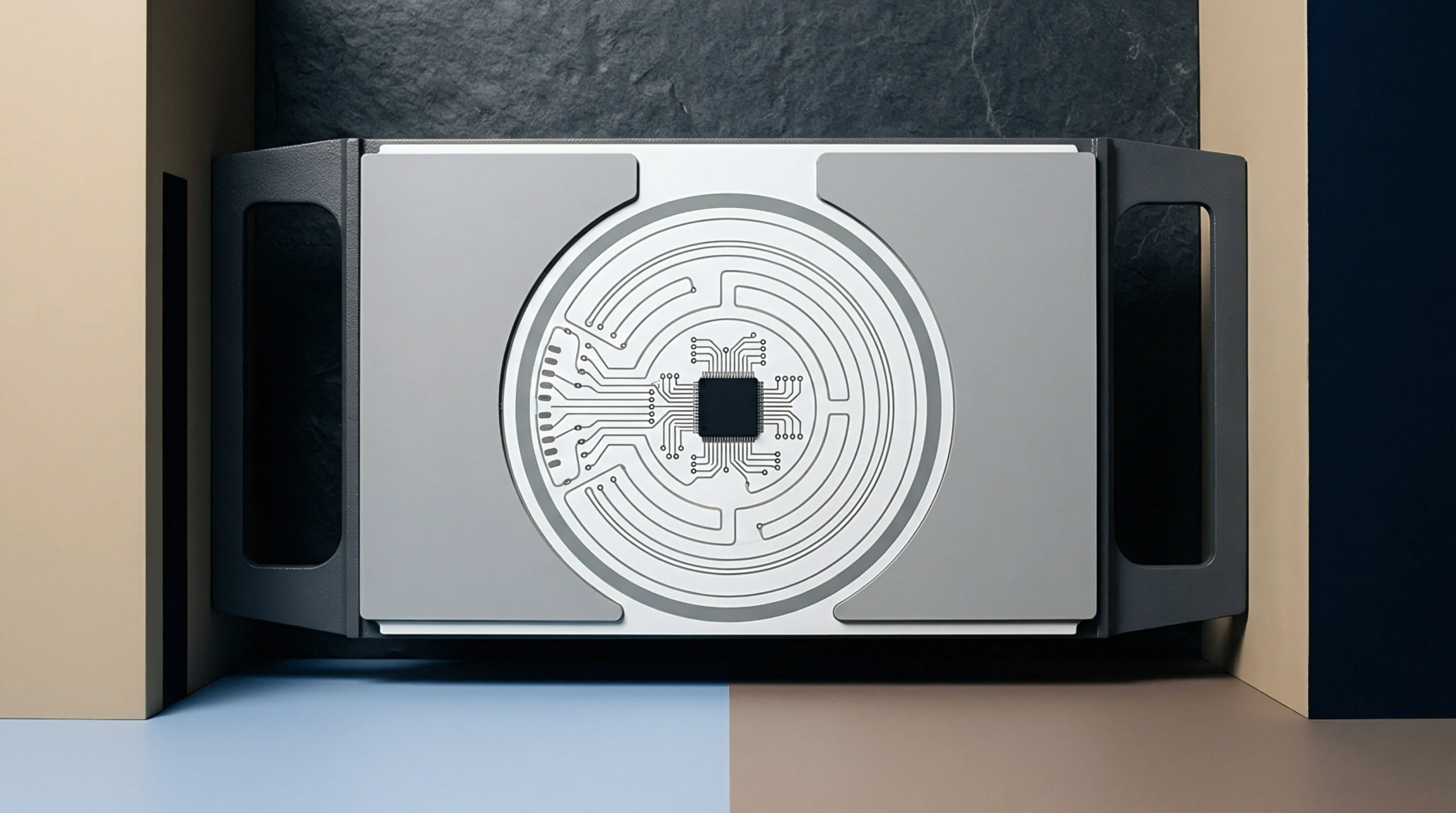
Boundary scan preconditioning isolates constrained nodes without test pads, allowing analog signature analysis to verify passive and junction integrity.

Hydrocarbon laminates recover nominal dielectric constants within hours through Fickian desorption, accelerated by post-reflow baking at 105 degrees Celsius.
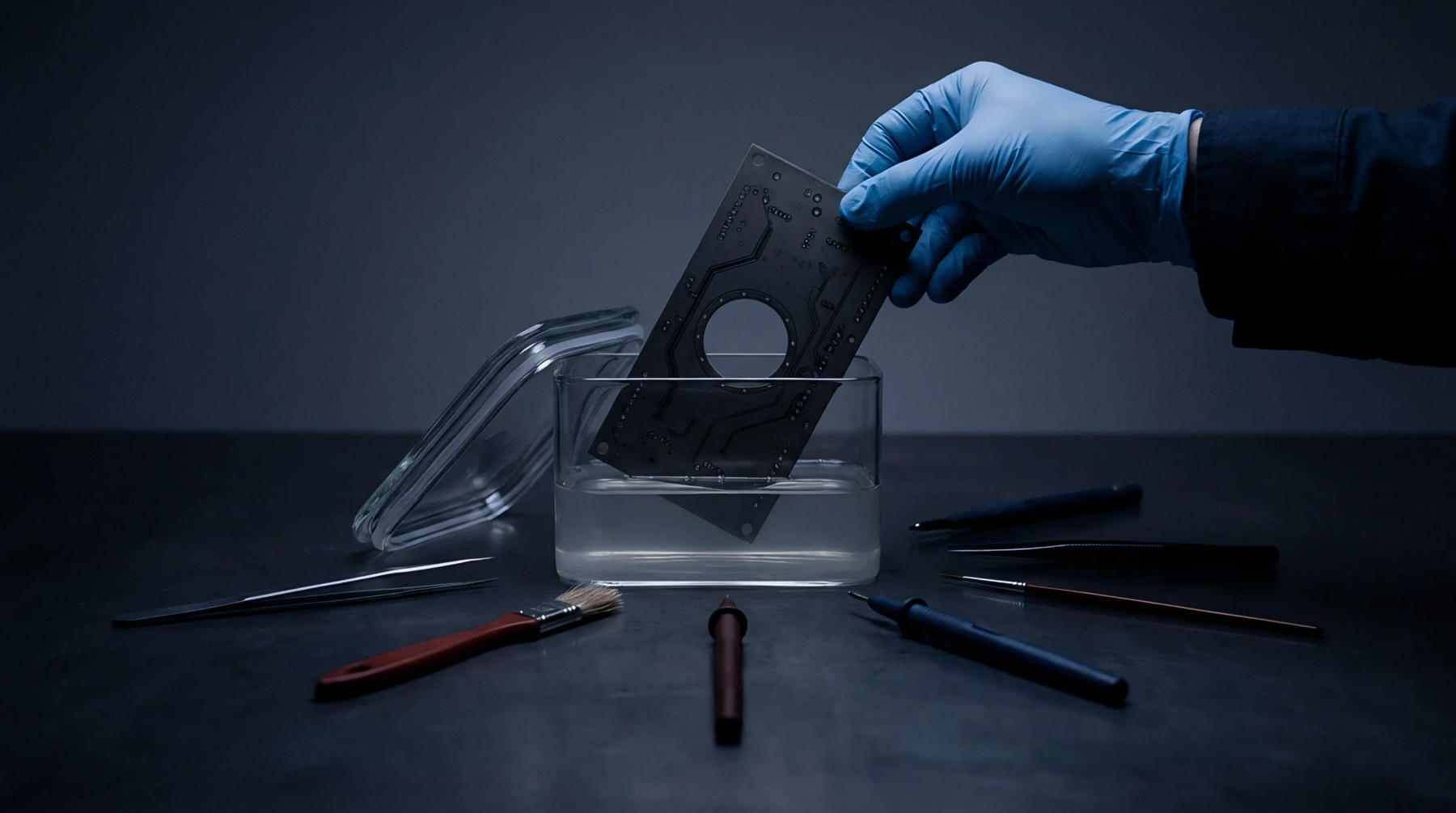
Characterizing printed losses requires isolating roughness skin depth from dielectric dipoles via de-embedded differential coupon extraction up to 50 GHz.
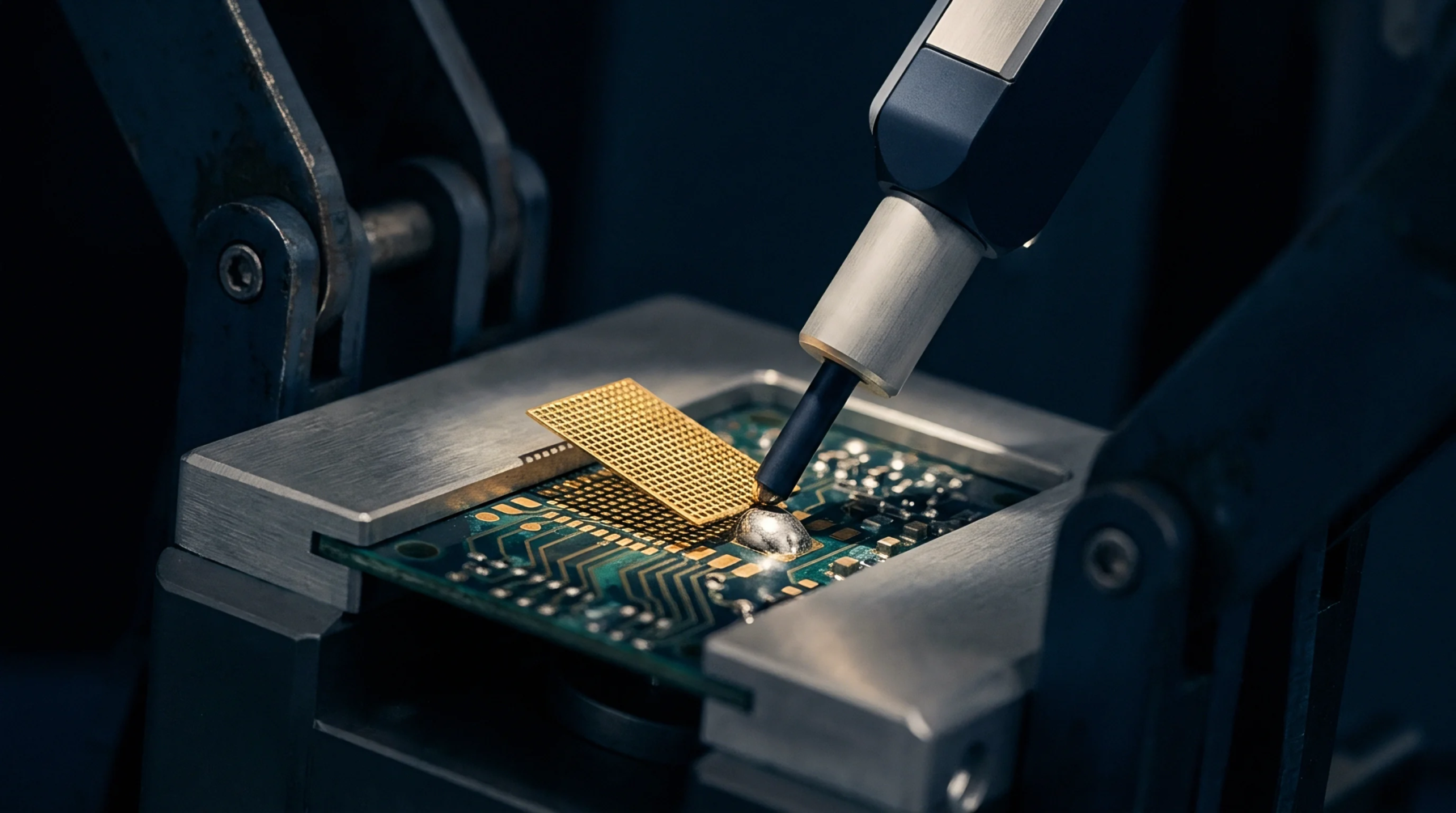
Verify structural fault coverage on high density assemblies by combining boundary scan with radiographic inspection where physical probe access falls below eighty percent.

Lead-free reflow elevates stripline phase delay by increasing polymer cross-linking and substrate permittivity, requiring tight furnace profiling and low-loss resin selection.
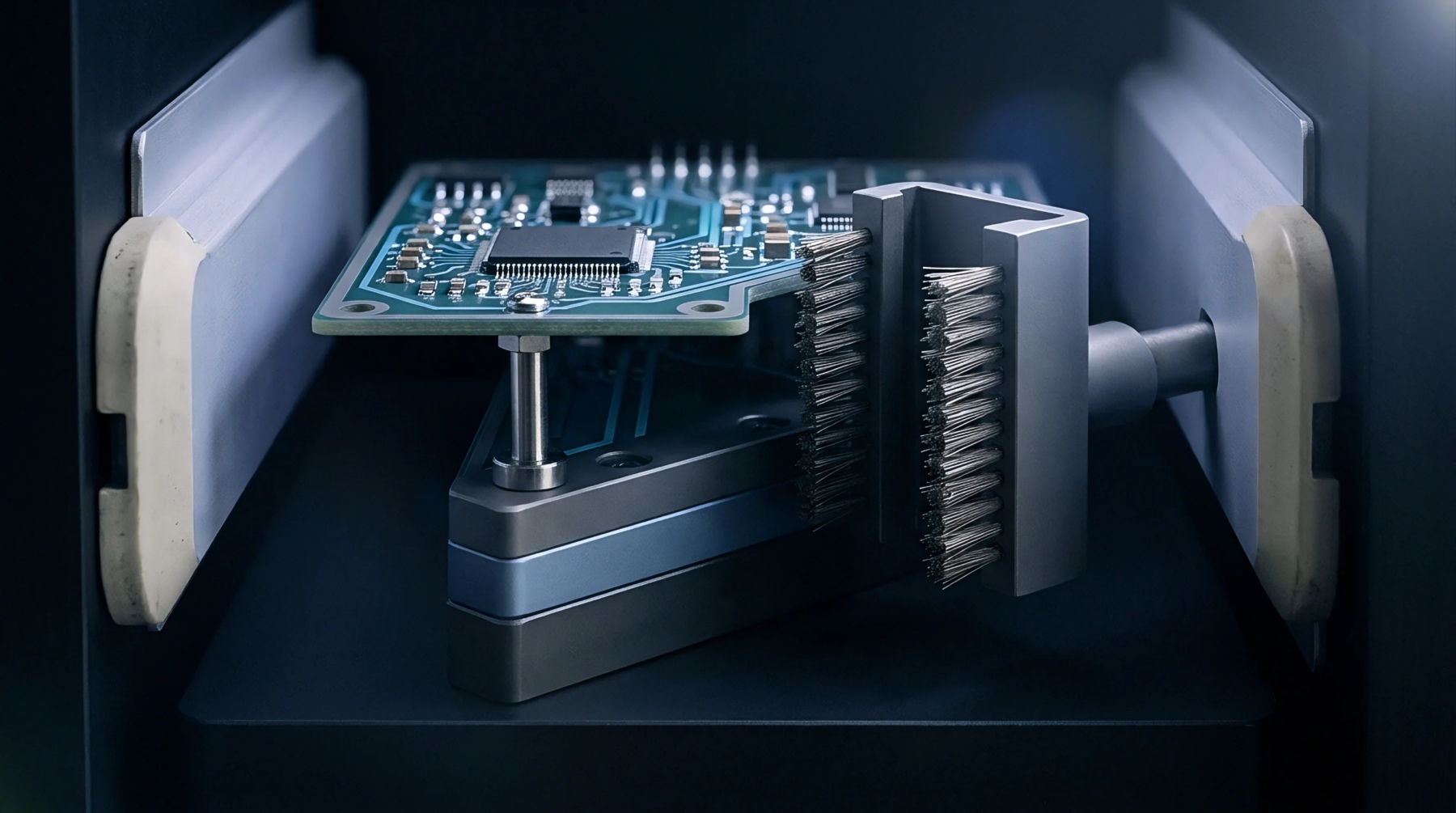
Calibrating supersonic nozzle stagnation pressure sets the argon cluster size distribution, locking impact energy per atom to preserve interfacial chemistry.

Oblique neutral cluster processing directs momentum into tangential surface shear, preventing subsurface lattice damage and high-frequency trace attenuation.

Calculate area ratio by dividing aperture base area by sidewall surface area to verify values exceed 0.66 for stable solder paste release on fine pitch lands.
Expertise is a utility, not a secret. sentiention™ publishes its working knowledge as open reference: intelligence layer covering the materials it sources, the markets it enters, and the reference that serves both.